
Conversational jamming
How to build a professional network that sustains you through a meaningful career.

When I was a kid my dad used to take me round projects he had worked on. He is an engineer, and worked on the teams that designed Heathrow Terminal 5, the Stockton Infinity Bridge and the Olympic Velodrome. The Velodrome is the one I remember best, standing underneath that roof while he explained where the shape had come from, the late nights the team spent on everything from airflow and temperature control to where the toilets should go, and the conversations with GB cyclists about what it would take to build the fastest track in the world.
He used to talk about how strange the whole process is. An idea starts in a room, moves onto paper, and then somehow ends up as steel and concrete, and then the lives of several million people are affected by something that began as a conversation in the back room of a London office.

Of course when I used to go on these trips I had no real sense of what was happening at the time. But looking back now, with the context of what I have chosen to spend my career on, it’s clear to me, that was where my understanding of what meaningful work looks like was being formed.
This summer my family and I spent two weeks in Ronda, a town up in the mountains of southern Andalusia that Hemingway and Orson Welles used to visit for creative inspiration. With that creative spirit in the air and a lot of time to kill, it seemed like a good opportunity to record an episode of The Long Way Round with my dad.

I spend most of my time thinking about, and talking to people about, how someone builds a meaningful and fulfilling working life. So I thought a good place to start would be by asking him what he thought had been the thing that had afforded him a successful and fulfilling career.
He immediately started talking about the importance of the community of people that you work with and for in doing what you do…..in other words your professional network….which determines both your access to meaningful work and how you get it done well. He talked about this idea of the “conversational jam“.
As a musician and someone who had been in thousands of jam sessions myself, I was very excited by this analogy.
What is a “jam”
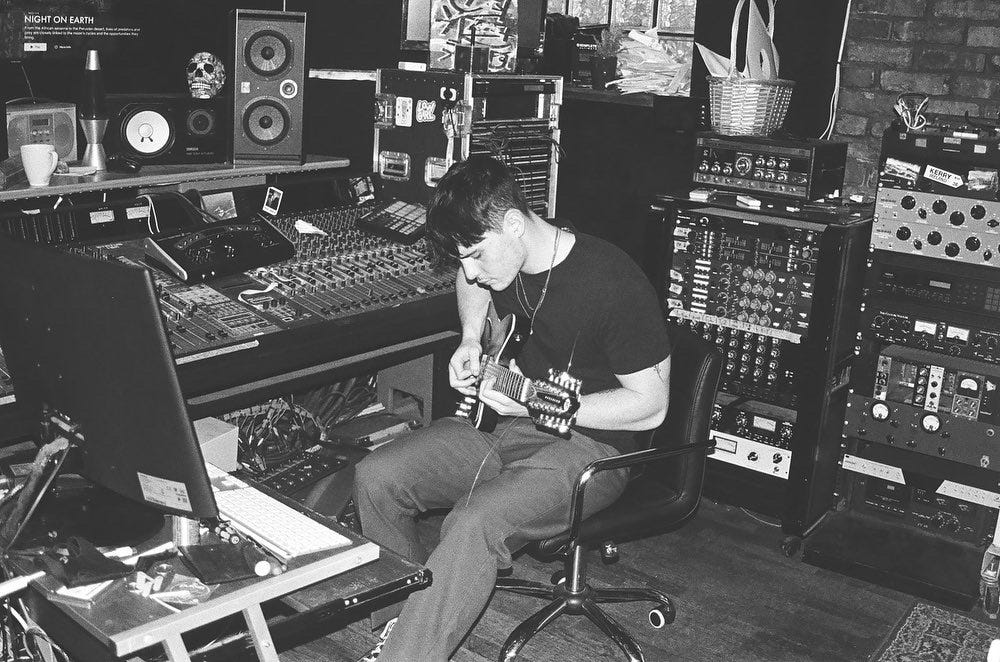
For the uninitiated, a jam is essentially a musical brainstorming session. Musicians get together to try things out, bounce ideas between one another, and hope that something worthwhile pops out the other end. Jam sessions are where spontaneity, collaboration and creative exploration come together. Unlike a rehearsal or a performance they’re unstructured, free flowing, and critically, they’re really good fun.
You may have experienced those conversations where everything seems to flow naturally, where the push and pull is just right, where you feel you are being heard, you laugh, you feel secure enough to say what’s really on your mind, and the time goes at twice the speed. That is the conversational equivalent of a jam.
He told me that he’s been having three or four of them a week for thirty-five years, over lunches and dinners and site visits, which puts it somewhere north of four thousand. Basically none of them started out with the intention of selling anything to anyone, yet a lot of them turned into projects that have built an extensive portfolio of work over three and a half decades. He turned up, talked about things he finds interesting with people who care about the same things, and let it go where it went.
I’m pretty impatient and don’t fancy waiting several decades to figure out how to be an effective “conversational jammer”, and so I wanted us to build a method around this concept, a method I hope anyone reading this can apply to their own working life.
The shape of a jam
Before we begin we must understand what actually happens in a jam. To an outsider it might look like nothing happens for the first few minutes. People plug in, tune up, set their levels. But in truth, everyone is using that time to suss out the other players in the room. What guitar are they playing? Did they bring sheet music, or are they going to play by ear? Where has everyone positioned themselves?
By the time the first note is played, everyone has a rough idea of where everyone else sits, and that decides what kind of session it is going to be. If you are the beginner, the experienced players will have clocked it before you finished tuning, and they will adjust. They will hand you eight bars, stay in a key you can follow, and play around you. Everyone has a reasonably pleasant hour, but what is about to happen is less of a jam and more of a lesson.
Say I had been playing in a jam in the late sixties and Jimi Hendrix walked in. I most definitely wouldn’t have used the time to push my random half-formed ideas on him. I would have sat back, shut up and listened, and if I was feeling brave I might have asked him something in the breaks. That is a very good way to spend an hour, and the conversations I have with people twenty years ahead of me are often the most valuable. But they aren’t jams…this is important to understand.
Once somebody counts in, the next minute or so is all about establishing the rules of the game. Genre, key, tempo, space. These are the things that make playing together possible at all, because they give a room of strangers enough common ground to build on. Nothing stops you playing a thrash metal riff over a gentle bossa nova chord progression. But it will probably sound pretty shit.
Conversations have the same rules, and misreading them is a quick way for you to spoil the energy of the room. If you can only play jazz, a jam with a heavy metal player is going to be a struggle for both of you.
“One of the things that catches people out is they’re deeply proficient in one thing, and they find themselves playing music they know very little about.”
This is the argument for generalism. Specialists go quiet the moment a conversation moves outside their subject, because the language is unfamiliar and there is no obvious way in. What lets someone stay in the room across thirty-five years of shifting subjects is exposure to enough different kinds of problem to hold their own with people who have spent their whole lives on any one of them. David Epstein makes this case at length in Range, which is one of my all time favourite books.
Breadth gets you into the room. What keeps you there is fluency.
If you enjoyed this and want something more practical, it might be worth thinking about upgrading. Paid is where the guides on the big career decisions live: when to go, what you can afford, and what's worth your time in the first place. All for the price of a coffee a month.

If you watch a good player long enough, you’ll begin to see that after a certain point it stops looking like conscious decision-making. Somebody throws out a chord change they have never heard before and they’re already inside it, because they have played enough things that resemble it. Years of scales and voicings and other people’s solos have collapsed into what you might call intuition.
The way to develop this fluency and intuition in conversation is through the study of established heuristics, or what Charlie Munger calls “mental models”. A mental model is a reusable way of making sense of something, borrowed from somebody who already did the hard thinking. My dad carries a handful of them: models of communication, models of behaviour, models of systems and how they change. He invented none of them, which is rather the appeal.
A model of why people behave the way they do works just as well on a client, a contractor, a government department or a stroppy teenager, which means a single framework can add value across hundreds of conversations about completely unrelated things. Musicians have the same thing in a ii-V-I progression. Learn it once and you’ll see it pop up everywhere, in a jazz standard, a Motown record, basically half of what gets played on the radio.
You build these the way a musician builds vocabulary, by noticing the patterns in the sessions you are already playing. The payoff is speed. Someone describes a situation you have never encountered and you have about three seconds to say something that moves the conversation forward. There is no pausing for five minutes to go away and research it.
Fluency is not the same as having something to say. You still have to go away and learn new material, which for a musician means new tunes and for everyone else means fresh ideas and things you have noticed since the last time. His rule is that you should always be arriving with something they haven’t got. “Otherwise you’re just telling the same stories, and in the end you become boring.”
All of this is about what you can do on your own. What decides whether anyone wants to play with you again is often what you’re doing while somebody else is playing.
In musical terms this is called “comping”. When someone else takes a solo you play underneath them, thin out your part, drop your volume and leave gaps their line can sit in. The players everyone wants to jam with are the ones who make other people sound better, and within about a minute of walking into a room it is obvious who those are.
The conversational version happens mostly between and under the words, in the paralinguistic cues. A quick glance that shows you are making space for someone else. Asking someone what they think and meaning it, laughing at a story you have heard a hundred times because they enjoy telling it, letting someone finish their line of thought when they ask for a second, which a musician might recognise as the particular frustration of not being allowed to resolve a phrase.
Making room for somebody also means speaking a language they can play in. Douglas Adams writes about the “babel fish”, a fictional, leech-like alien creature from his sci-fi series The Hitchhiker’s Guide to the Galaxy. When placed in your ear, it instantly translates any spoken language into your native tongue by feeding on brainwave energy.
A friend of my dad’s uses it to describe the enormous amount of value lost on big projects because everybody uses the same words to mean different things and nobody notices. A good analogy works like a Babel fish. It lets someone from another discipline into the conversation in a single move, kind of like a linguistic bridge. The caveat is that analogies are partial and you need a lot of them. Plenty of people run everything through sport, but there is a ceiling on how much of the world you can explain through one lens before people stop listening.
The other thing that opens a room up like basically nothing else is laughing. Between 2009 and 2012 his company was winning a lot of awards for their design work, and he got curious about what made those particular teams so effective, so he went and asked people a series of questions about what they believed allowed them to be so successful. Interestingly, good project management came last on the list, despite being the thing that so many of the books are about. What everyone talked about was that it had been fun.
A room that laughs is often a room in which people feel safe to be ridiculous, and ridiculous is where a lot of the best ideas are. Something silly gets said and buried in the middle of it is a proposition nobody would have risked stating seriously. The trap is being ridiculous while appearing to be serious, so it needs a frame. This is a joke. Now I am going to say something stupid.
How did it go?
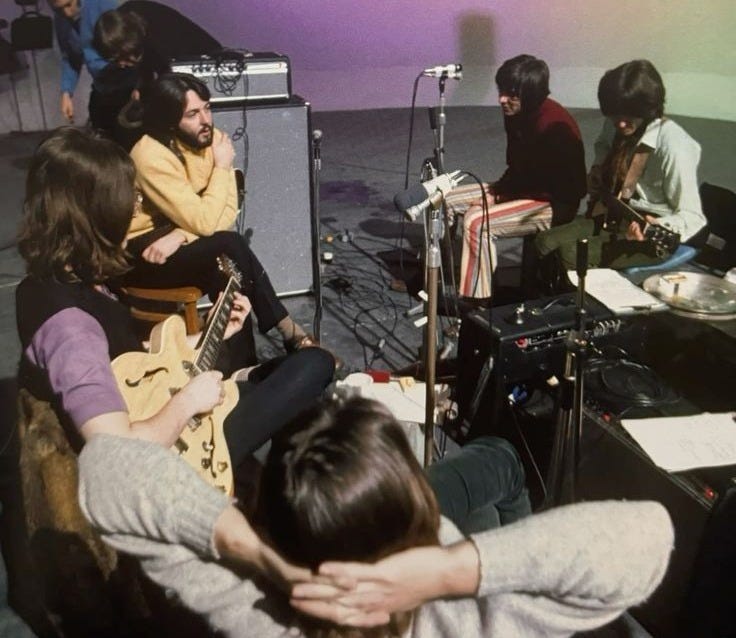
It’s pretty easy to tell how a session went if you know what to look for. People hang around. They want to know when the next one is. Occasionally someone will send over a relevant article or book a week later. Musicians do the same thing with song and artist recommendations.
But one of the most important things is that nobody comes away feeling like they won. “It mustn’t feel like I won,” he said. “If you come away from it and you feel like that, it’s probably a disaster.” Any power dynamic that may have existed at the start has dissolved, and what’s left is mutual respect for each other’s ideas.
That is the part that closes the loop opened at the start of the session. Everyone walked in doing a whole lot of judging, whether they’re aware of it or not, and if the session worked, by the end most of these preconceptions are no longer relevant. Nobody is keeping score.
What people carry out of the room instead is something he calls positive novelty. Somebody has handed you a thing you did not have when you walked in, whether that is a framework that makes sense of a problem you had been circling for months, or a way of describing something you had felt for years but didn’t have a name for. In a jam it is the moment someone plays a voicing you have never heard and you stop them to ask what it was, because you already know you are going to steal it. It arrives as a gift, and the person who gave it away is more than happy to share.
Two people have each learnt something and each given something away, and both now have someone in the world who is positively disposed towards them.
Finding your scene
Musicians don’t build audiences to begin with, they build scenes. A handful of people in the same city playing the same music, sitting in with each other week after week, and the bands that come out of it are almost always assembled from people who had already spent years in rooms together.
Some people talk in terms of “communities of practice”. My dad, who is a former President of the Institution of Civil Engineers, likes the medieval concept of the guild. He talks about being part of a “guild of builders” ie those people within society whose purpose it is to build the houses we live in, roads and railways that we travel on, power stations we rely on to keep the lights on and so on. Whether he is talking to somebody as a client, a competitor or a contractor, they are all people who make the built environment everyone else lives inside. He reckons I am currently somewhere in the guild of educators.
That’s why it often takes fewer of these conversations than you might think to see the fruits of your labour. Building the world’s biggest net takes forever and the nets are hard to drag around. Better to work out which music you want to play, go and find the people who play it, and keep turning up.
Back to the start
To take things back to the start of this conversation, with the simple question of what had made my dad’s career meaningful. Across four thousand conversations, the mechanism turns out to be much simpler than one might’ve thought.
Find interesting people who care about the same problems as you. Be curious. Be generous with your ideas. Laugh. And most importantly…enjoy yourself.
To read next:


Almost nobody gets taught any of this. You're told to network, which usually means collecting contacts, and never told what to do once you're in the room. Working out what you're actually aiming at is the part that comes first, and it's most of what we built Rumbo to do.
Sign up here to try it out.
Not just a critical part of work, it's even more important in everyday life. Conversation that moves in a direction. As Joe Zawinul of Weather Report used to say, "We jam and we never jam."
Loved the analogy and loved this piece, mostly because it's where I'm at right now with my work situation. Thank you for having the right words and the right time.
Love this as Marley would say “We’re jammin”